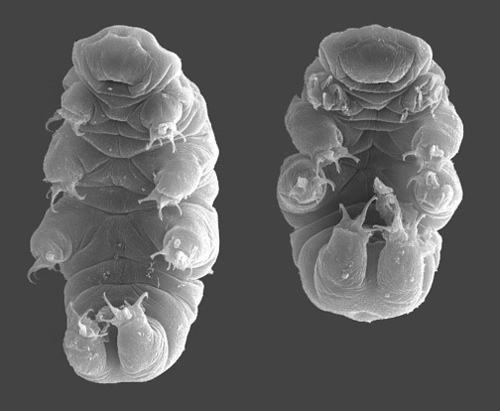
Phylum Tardigrada · the moss piglet desk
Eight legs, one tun, infinite personality.
waterbears.info is the favorite hub for people who love tardigrades: real anatomy, real spaceflight, real genomes — and posters of plump micro-bears walking through moss like they own the forest.
What are water bears?
A whole phylum that fits on a moss leaflet.
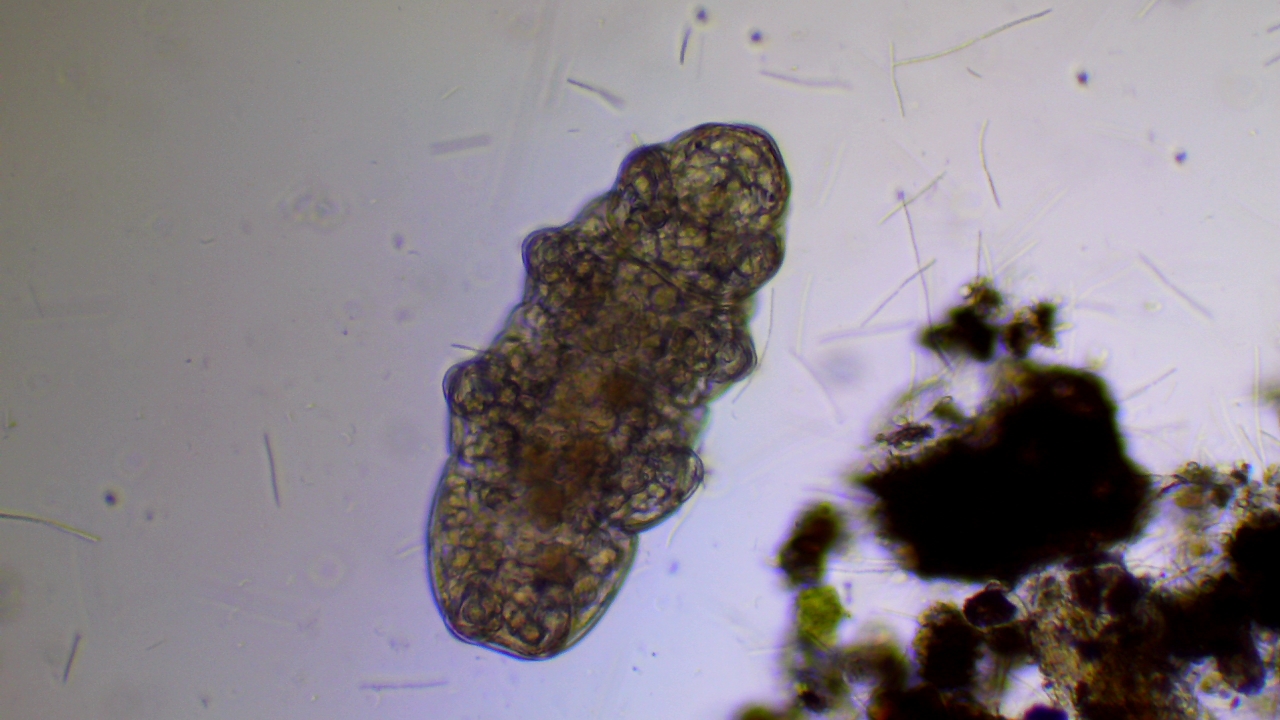
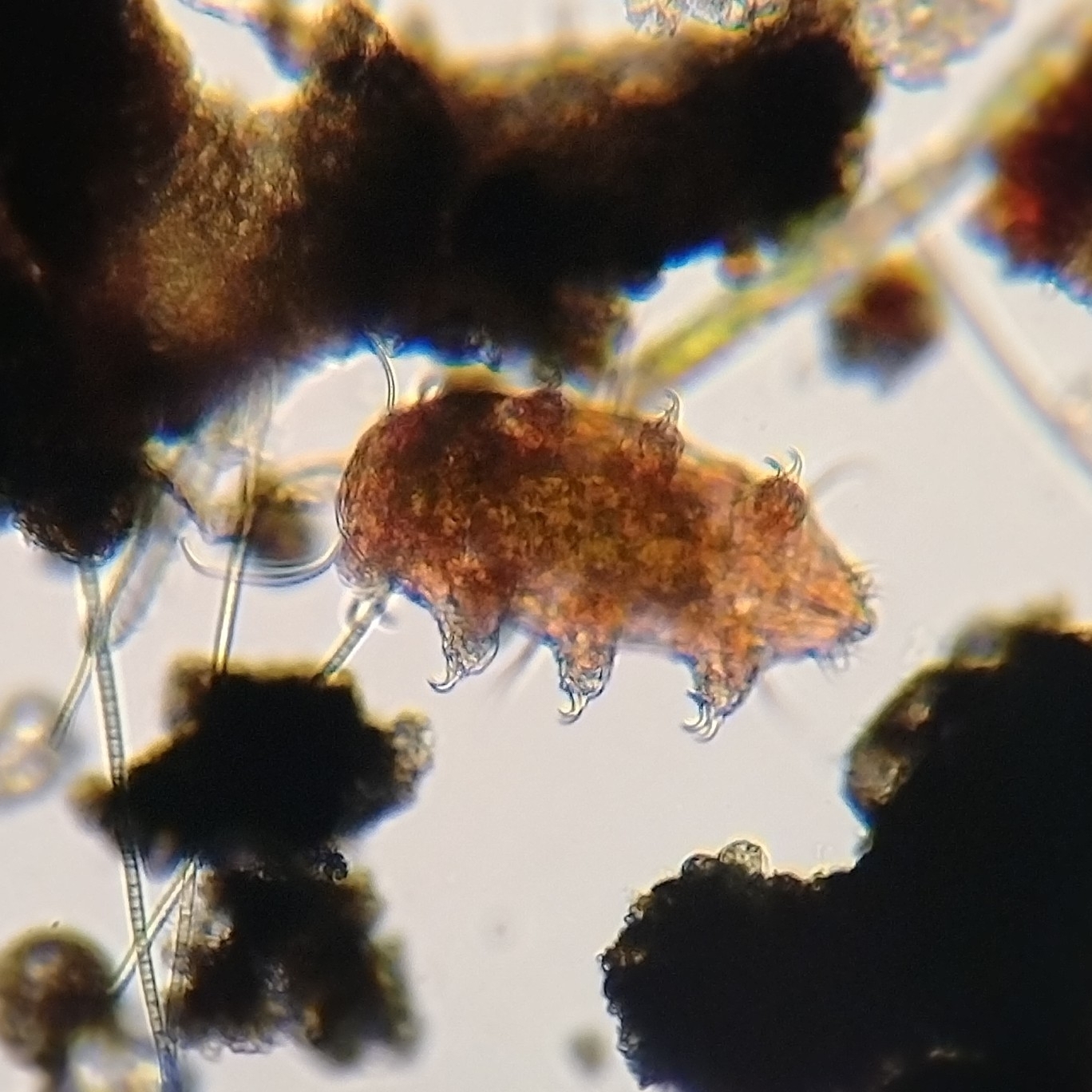
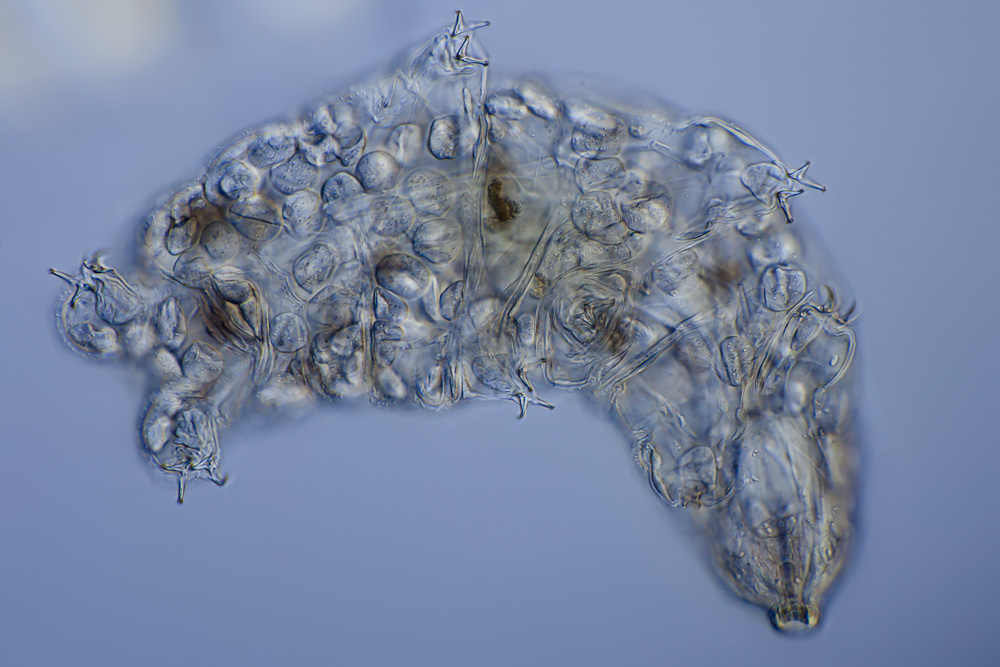
Tardigrades — water bears, moss piglets, Bärtierchen — are microscopic ecdysozoan animals. They are not insects, not crustaceans, and not “nearly immortal.” They are a real phylum with a compact body plan, a sucking pharynx, and a talent for shutting metabolism almost off when a puddle dries. See Biology and the Sources hub.
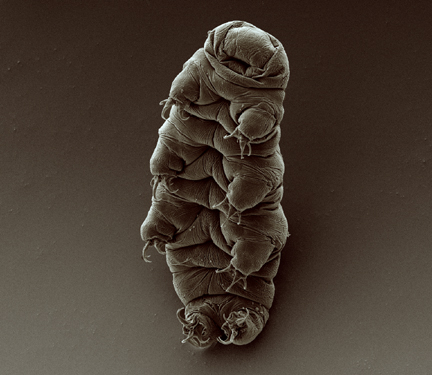
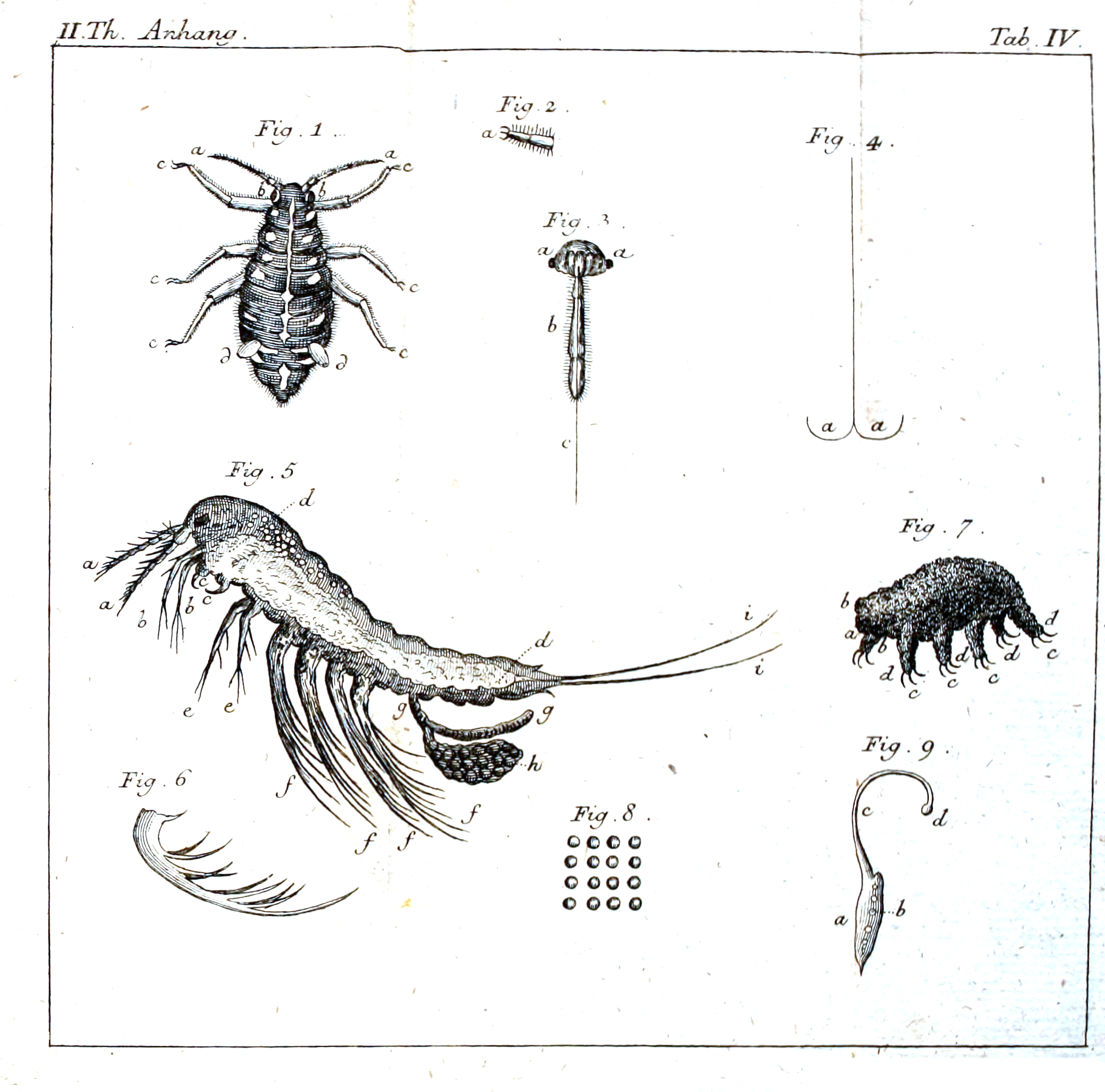
Johann August Ephraim Goeze drew the first water bear in 1773. Lazzaro Spallanzani later named them Tardigrada — “slow steppers.” They live wherever a film of water lasts long enough: moss, lichen, soil, beach sand, lake sediment, the sea, rooftops, and polar fellfields.
Two living classes dominate the textbooks: Eutardigrada (smooth cuticle, malpighian-like organs) and Heterotardigrada (armored plates, often marine or moss-dwelling echiniscids). A third class, Mesotardigrada, rests on a single lost Japanese hot-spring specimen and is treated with extreme caution.
They do not “survive anything.” Hydrated, active tardigrades are ordinary animals. The legend is the tun — a dried, contracted, ametabolic state.
Wander the cabinet
Six rooms, no pop-up modals.
Read like a naturalist. Fan out like a collector. Every page is a real HTML file.
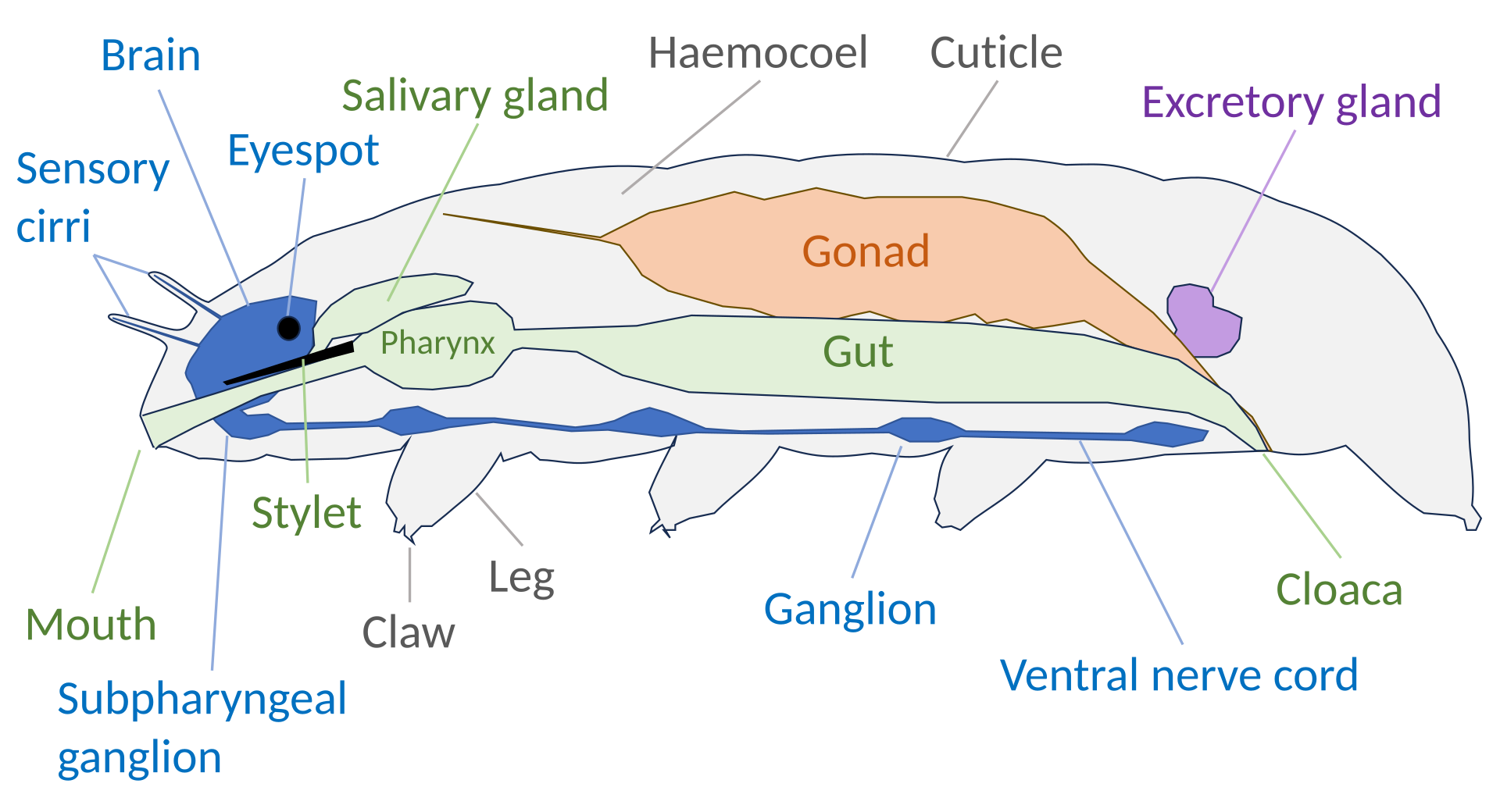
Biology
Anatomy, habitat, ecology — claws, stylets, moss, and marine arthrotardigrades.
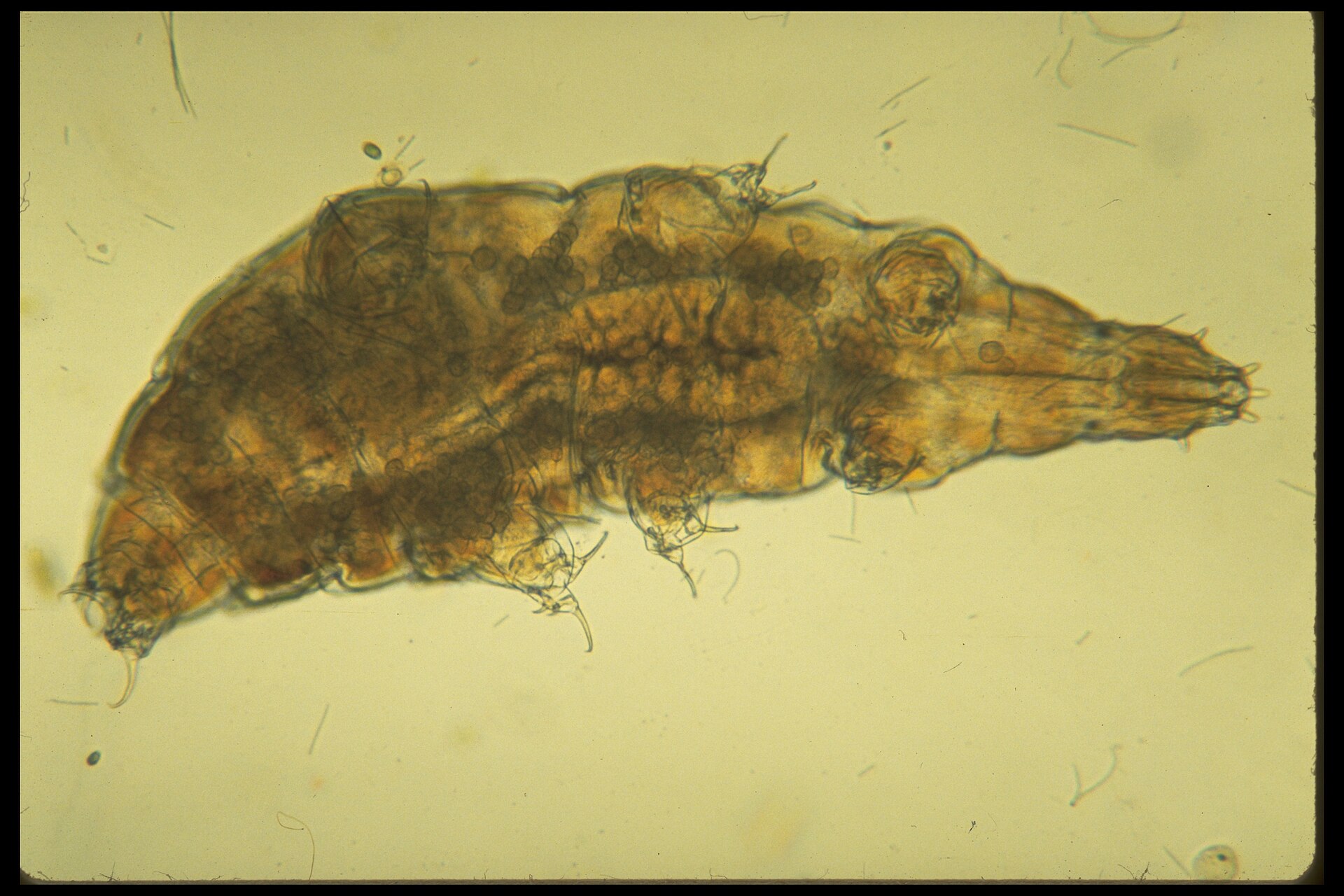
Species
Hypsibius exemplaris, Ramazzottius varieornatus, Milnesium tardigradum.
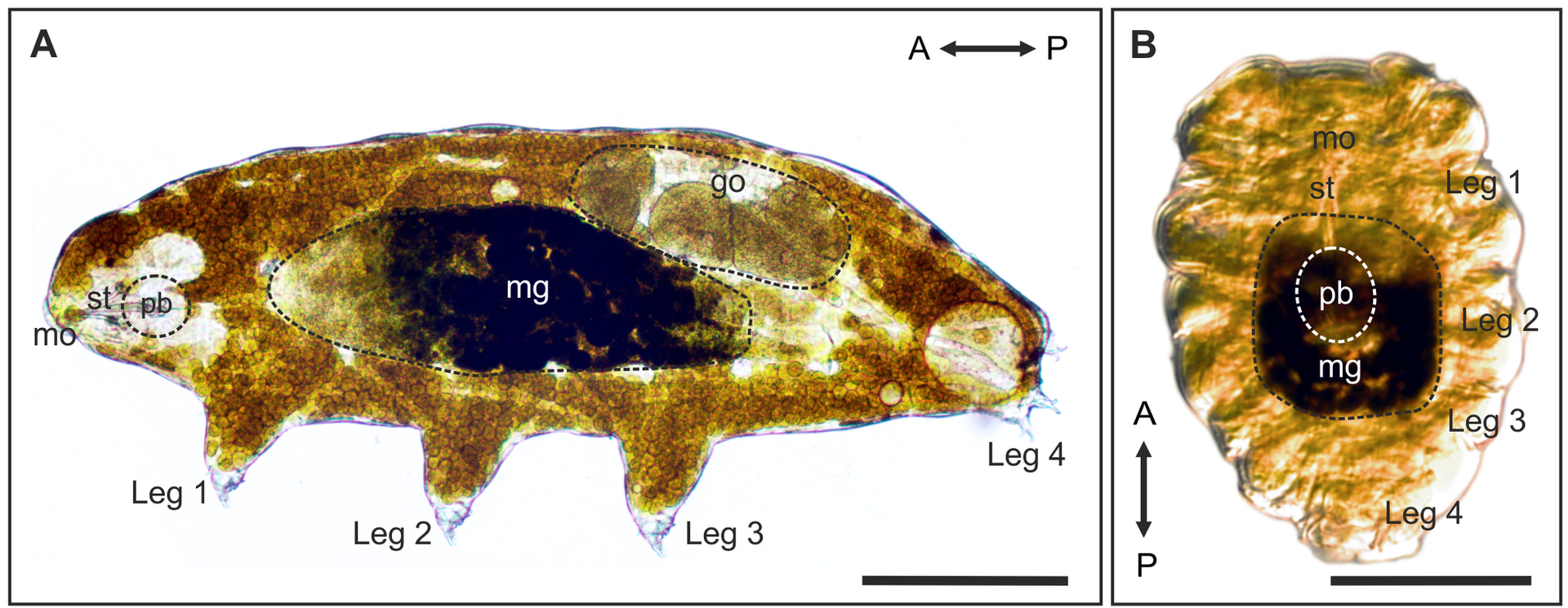
Cryptobiosis
Anhydrobiosis, tun formation, CAHS gels, and why trehalose is not the whole story.

Space
FOTON-M3 / TARDIS, TARSE, TARDIKISS on STS-134, and the Beresheet crash.
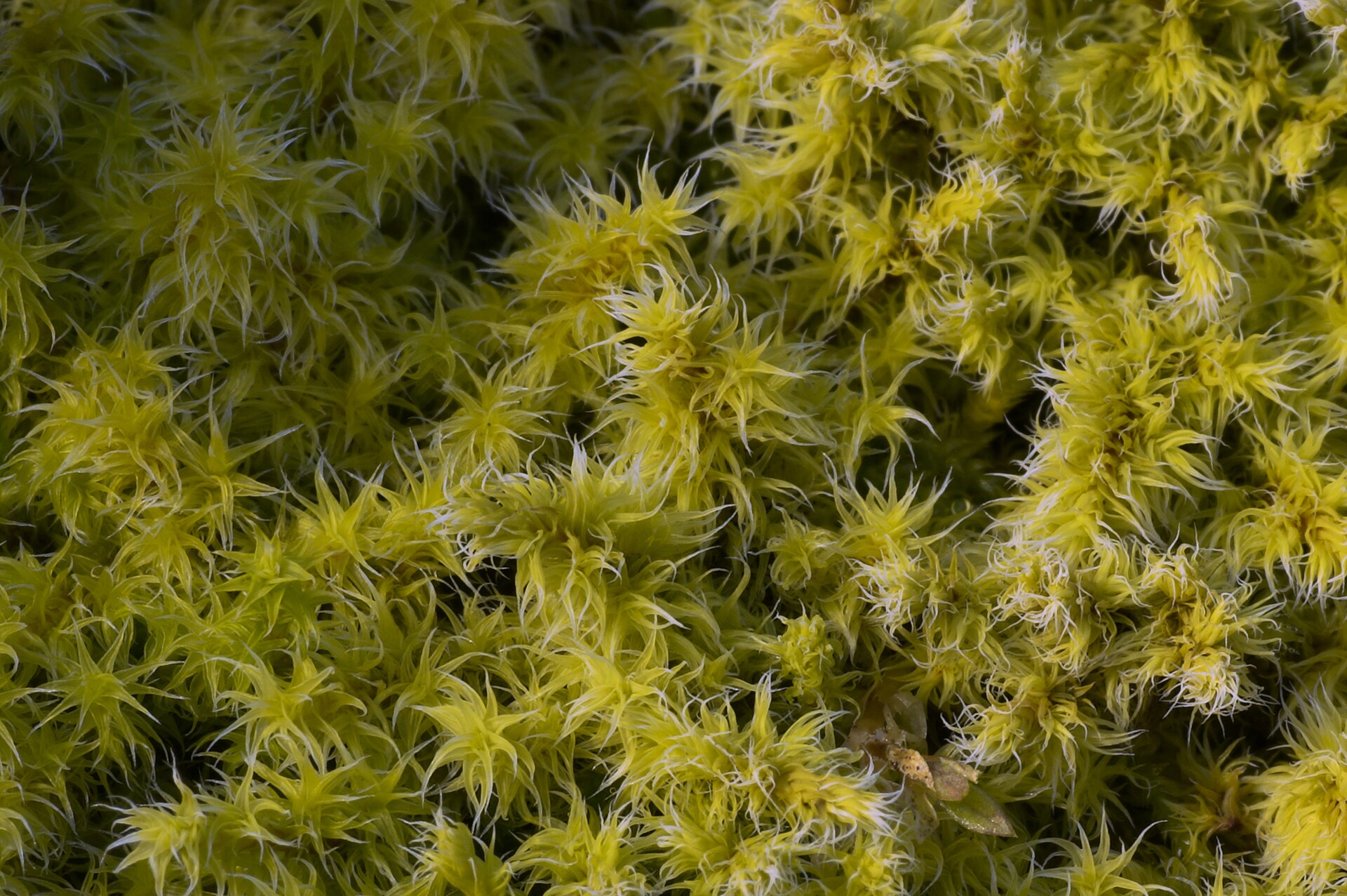
News
A dated digest stub — what a moss-piglet week looks like on this hub.
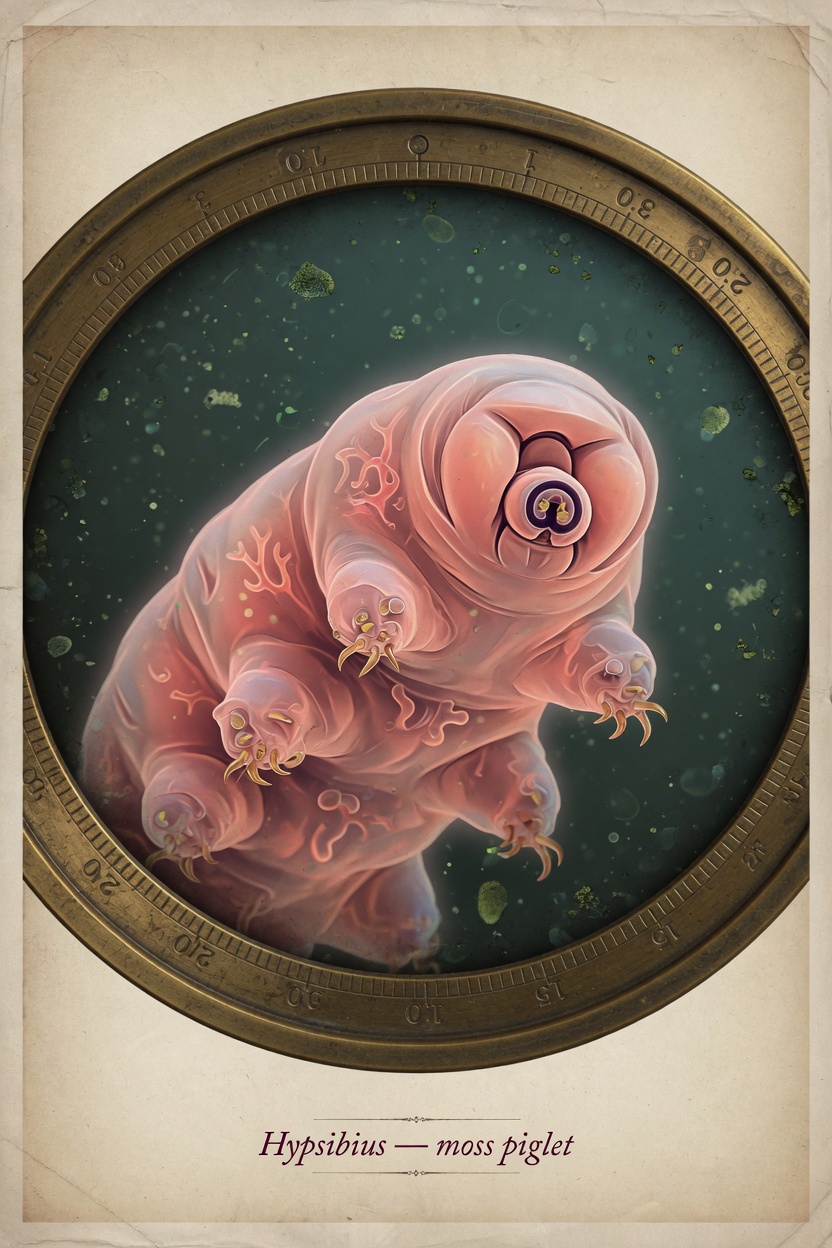
Shop
Posters, kids and adult coloring books, tees. Polished cards, no fake checkout.
Featured cabinet
Image-heavy on purpose.
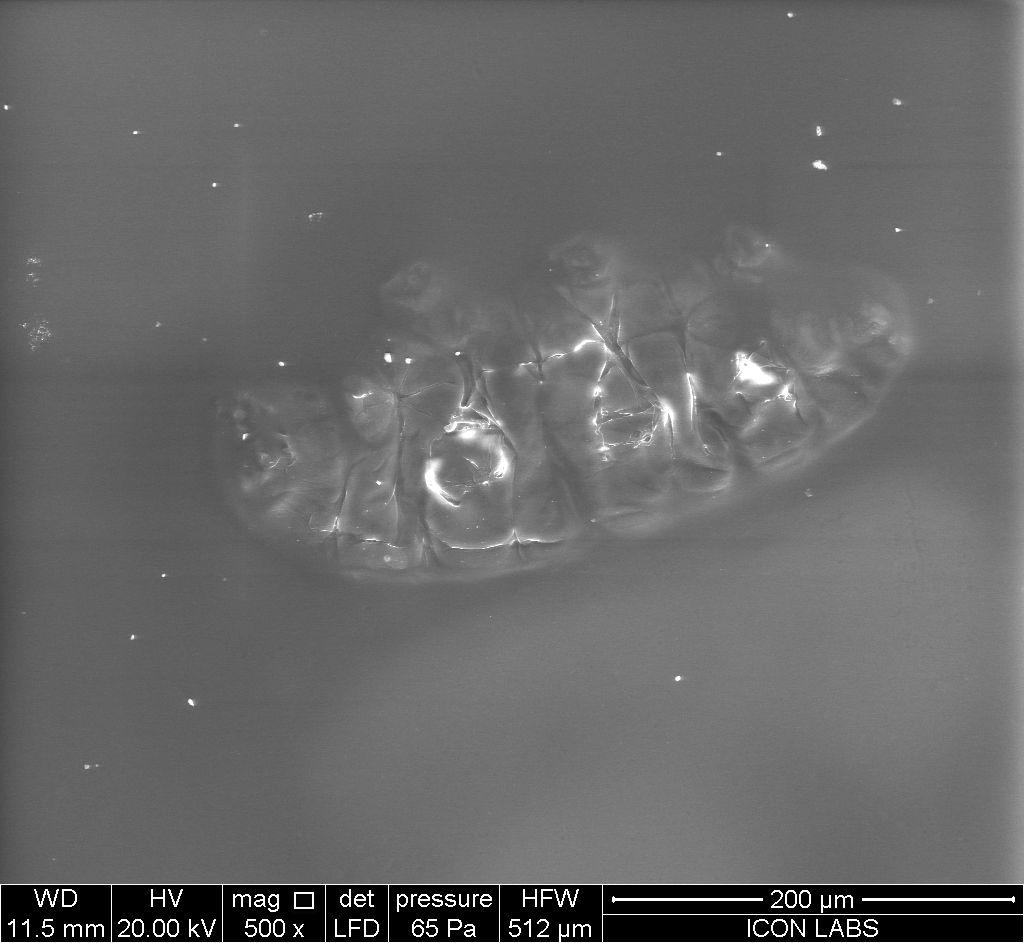
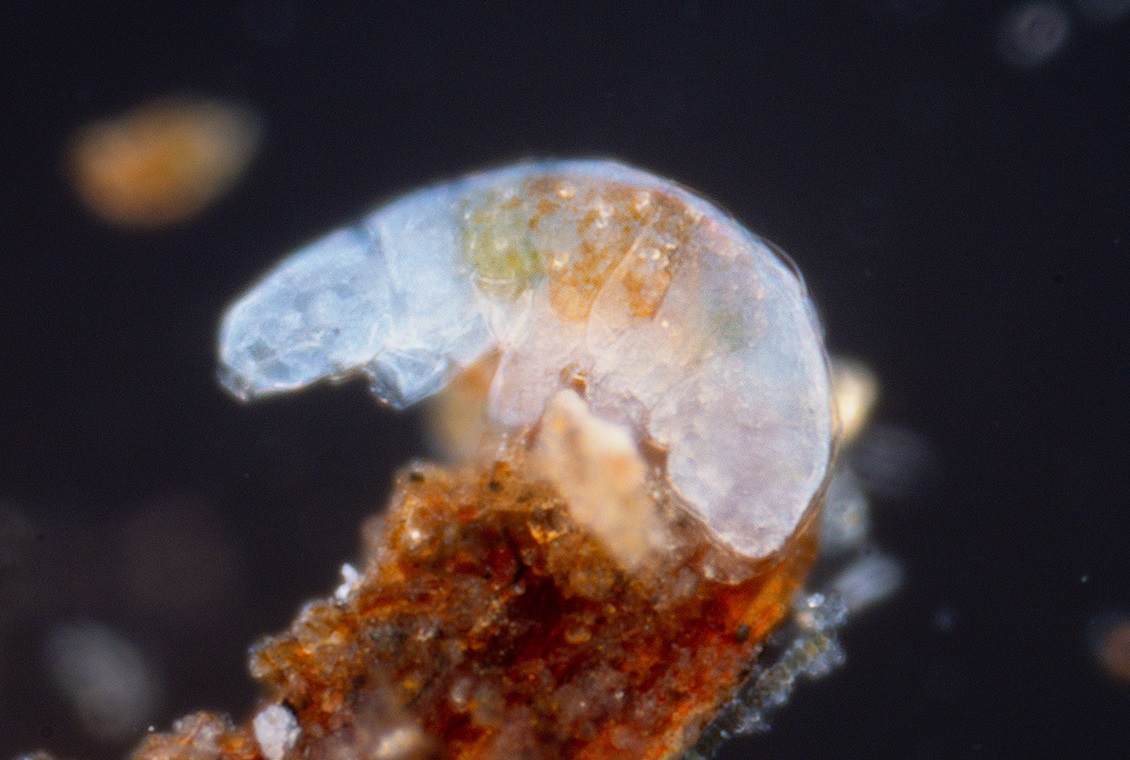
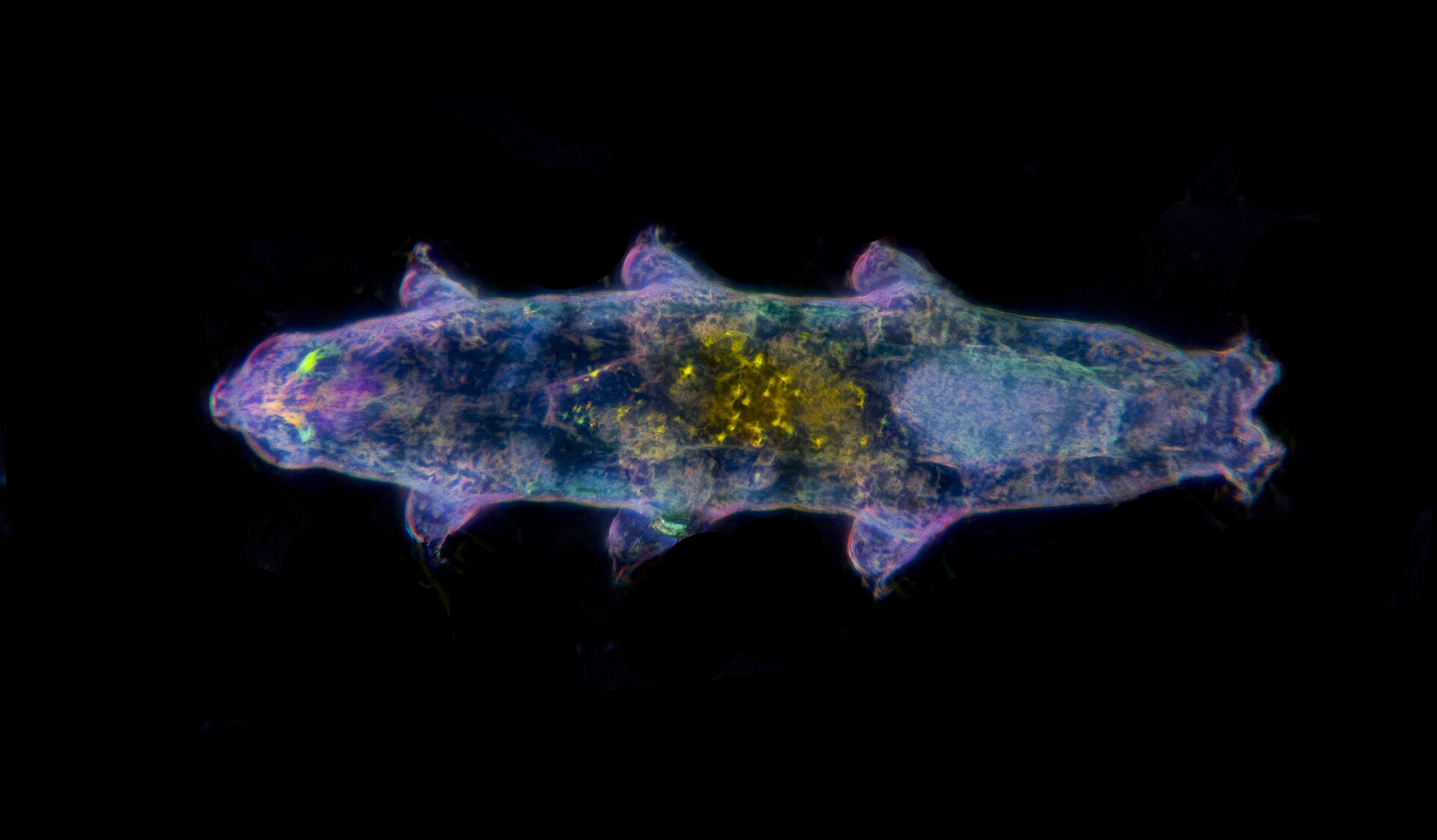
Licensed photographs, SEM plates, and 19th-century engravings. Full credits in each caption and in CREDITS.md.