Phylum Tardigrada
Biology of the slow steppers.
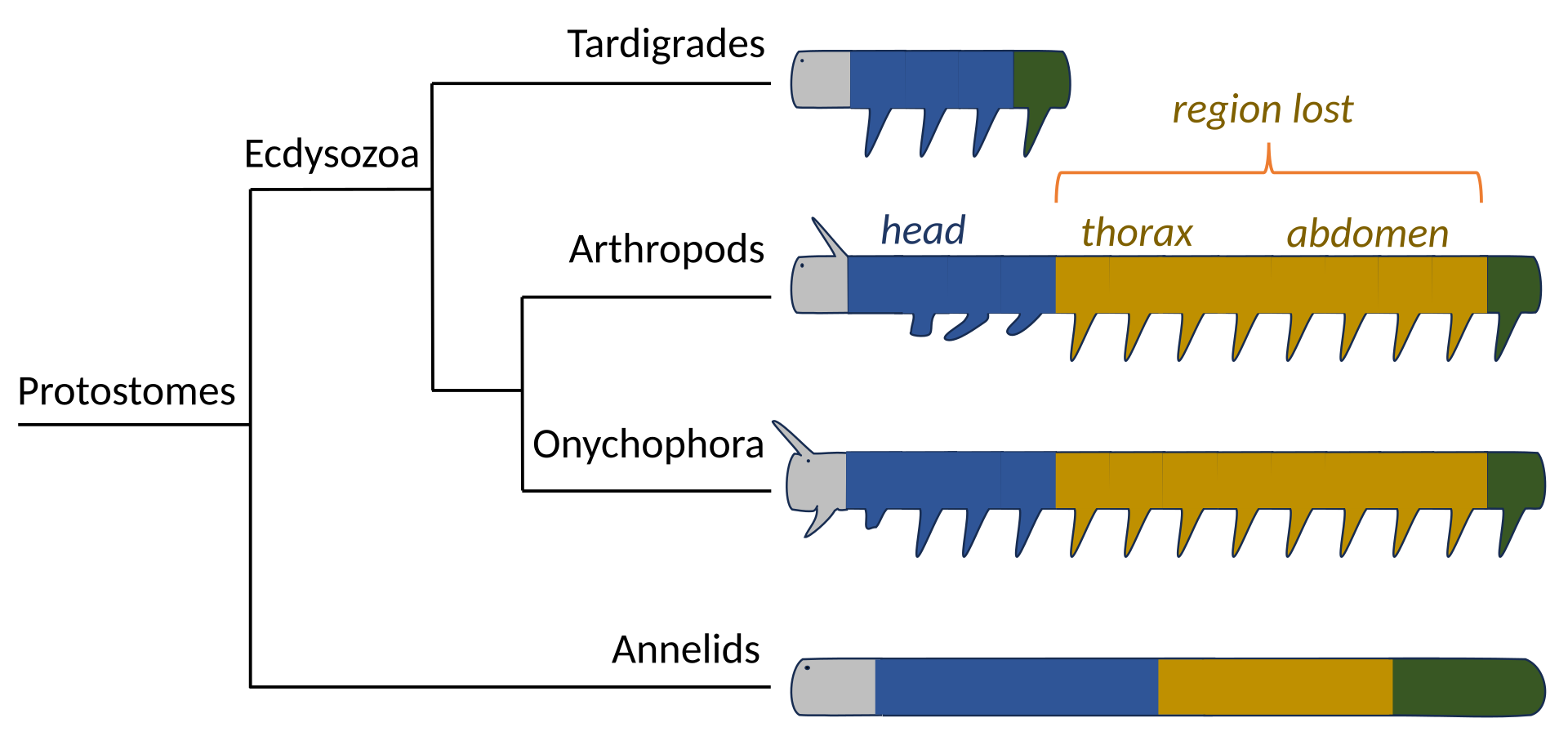
A compact animal: four body segments plus a head, a triradiate sucking pharynx, claws that hook moss, and an ecology that runs on wet films. This is the overview we wish every viral thread started with.
Anatomy
A walking head with a pocket-knife mouth.
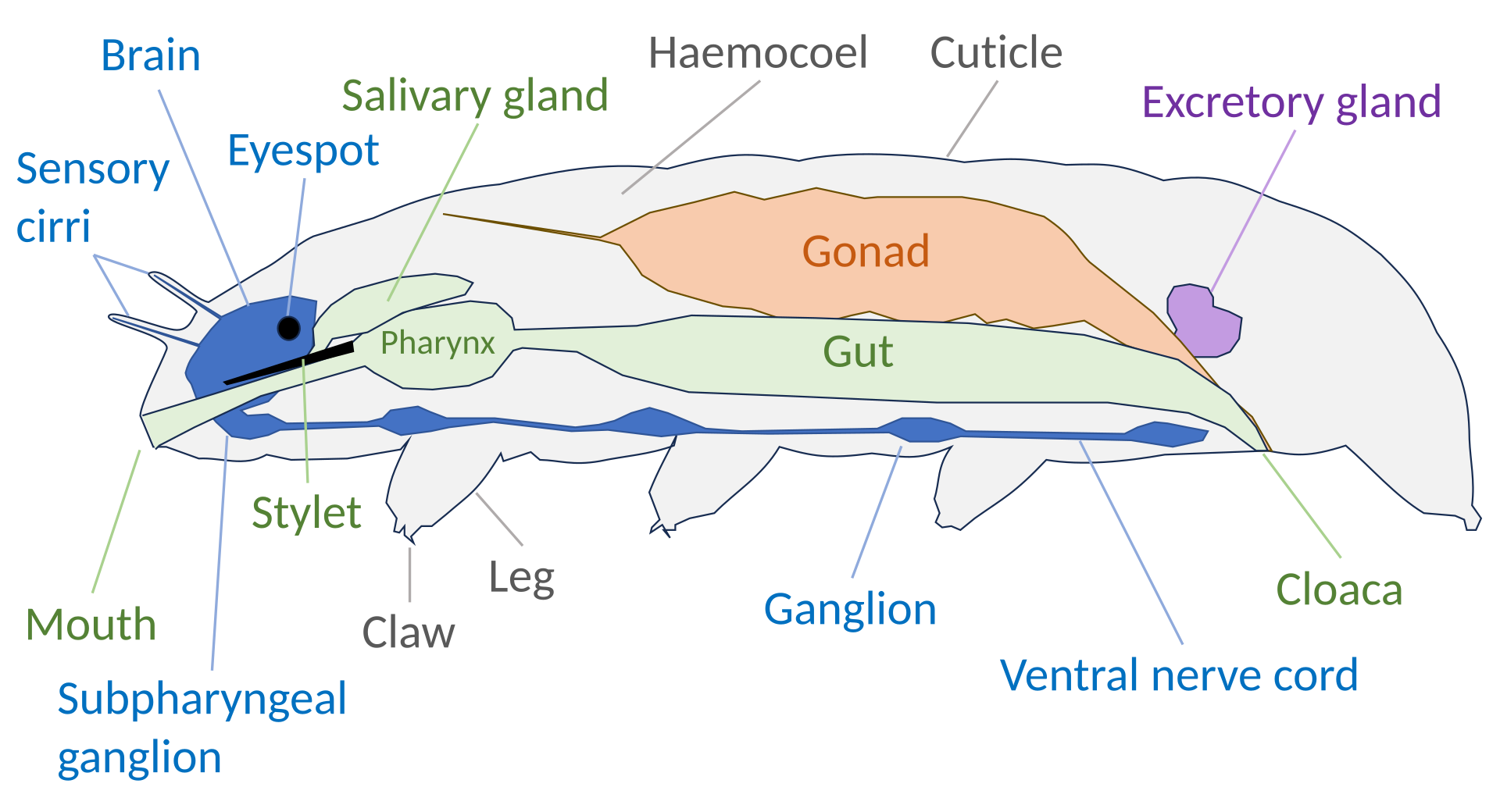
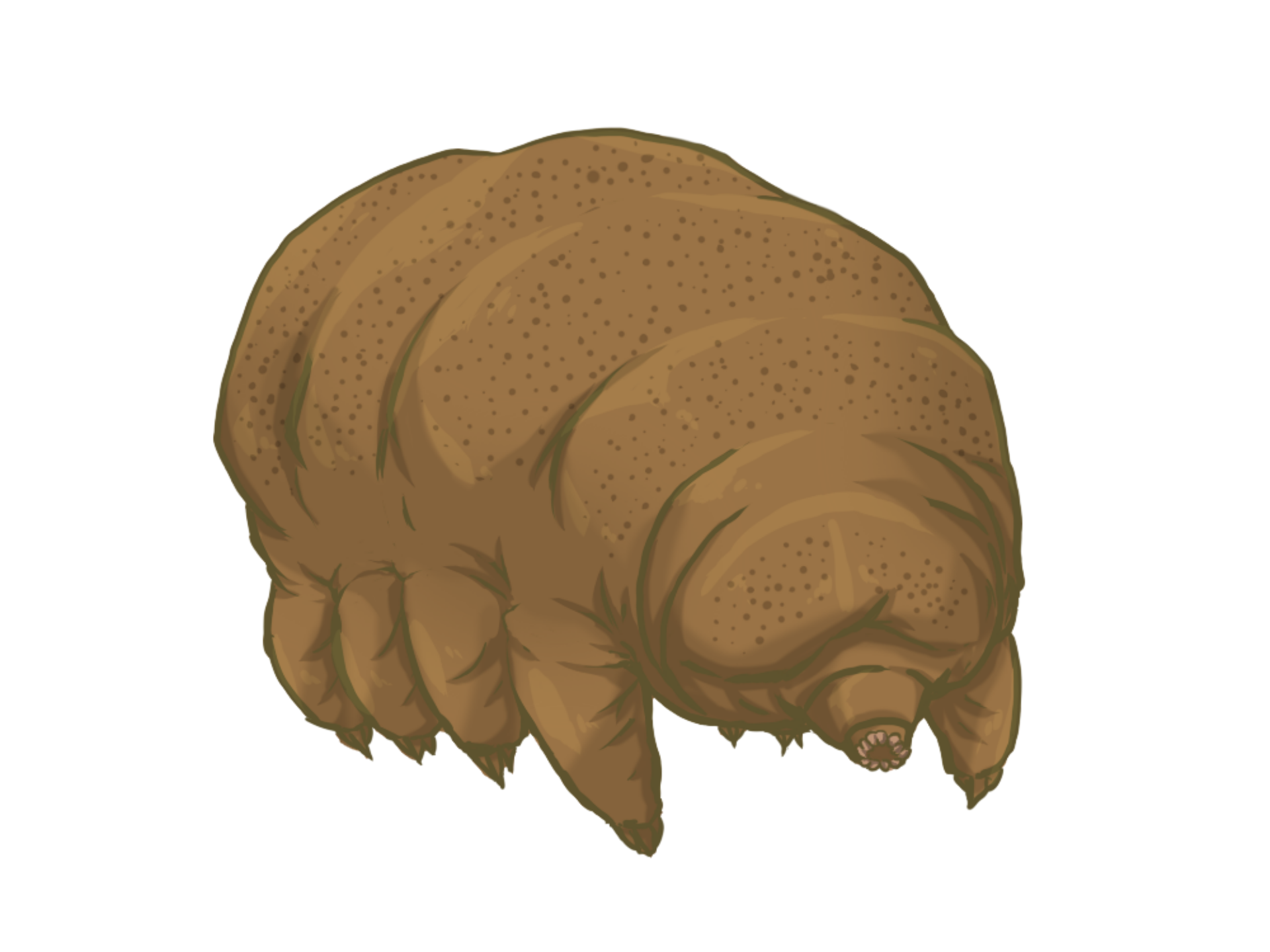
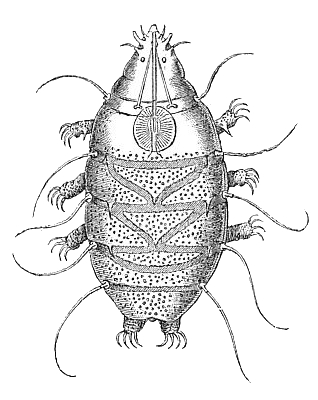
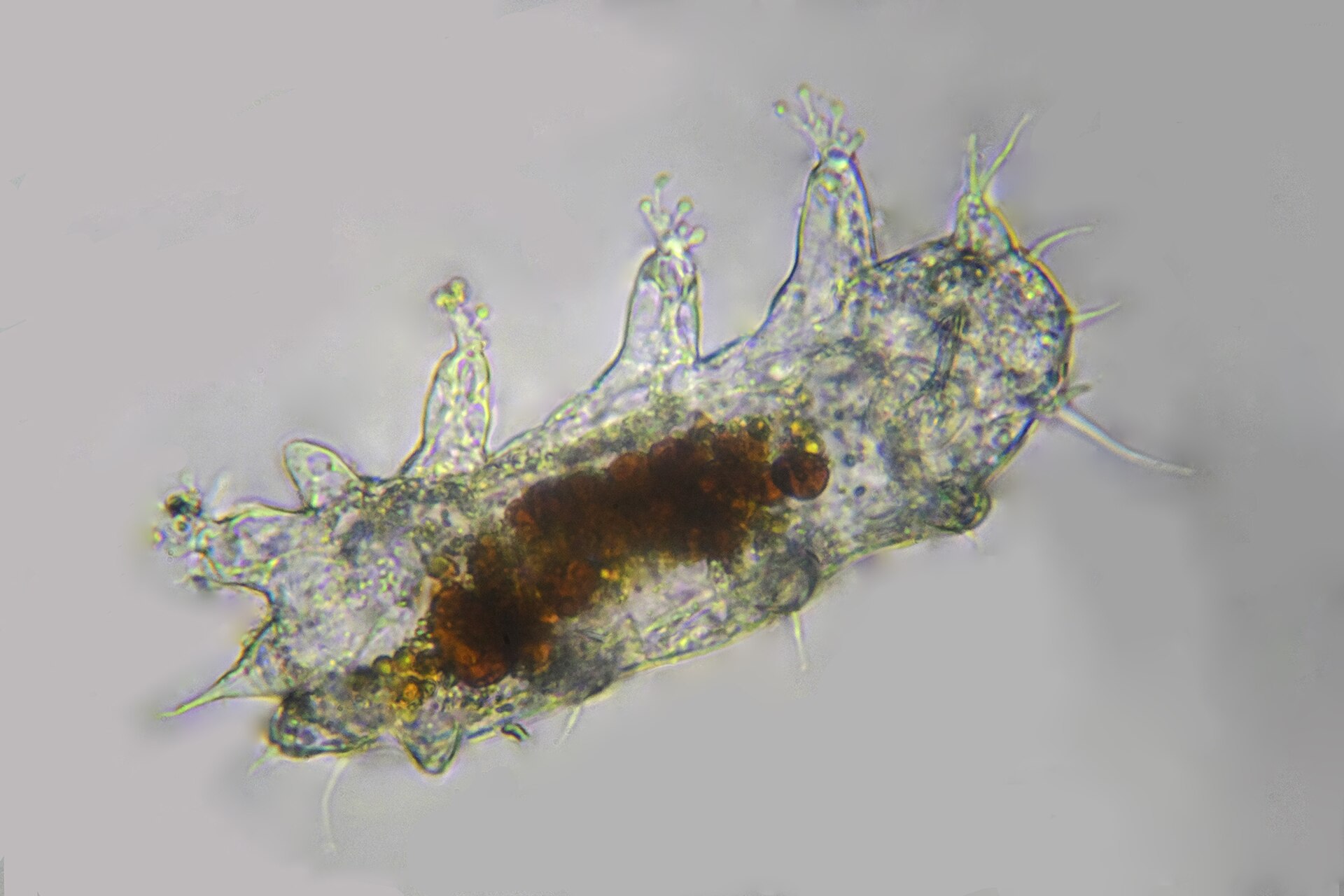
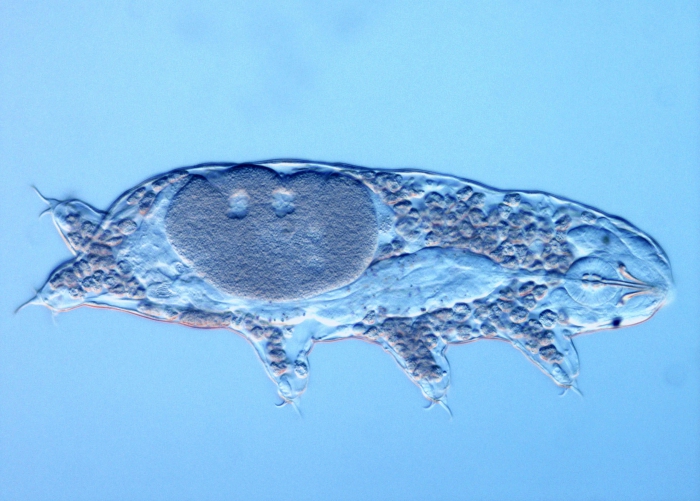
The body is short and barrel-like, typically 50 µm to a little over a millimetre. Four pairs of stubby lobopodal legs end in claws (eutardigrades) or in digits with claws (many heterotardigrades). The last pair points backward, which is why a walking water bear looks like it is forever slightly late for an appointment.
The mouth leads to a buccal tube and paired piercing stylets — cuticular knives used to puncture plant cells, algae, rotifers, or other tardigrades, depending on the species. A muscular, triradiate pharynx pumps. The gut is a simple tube. Coelom is reduced; the main body cavity is a hemocoel.
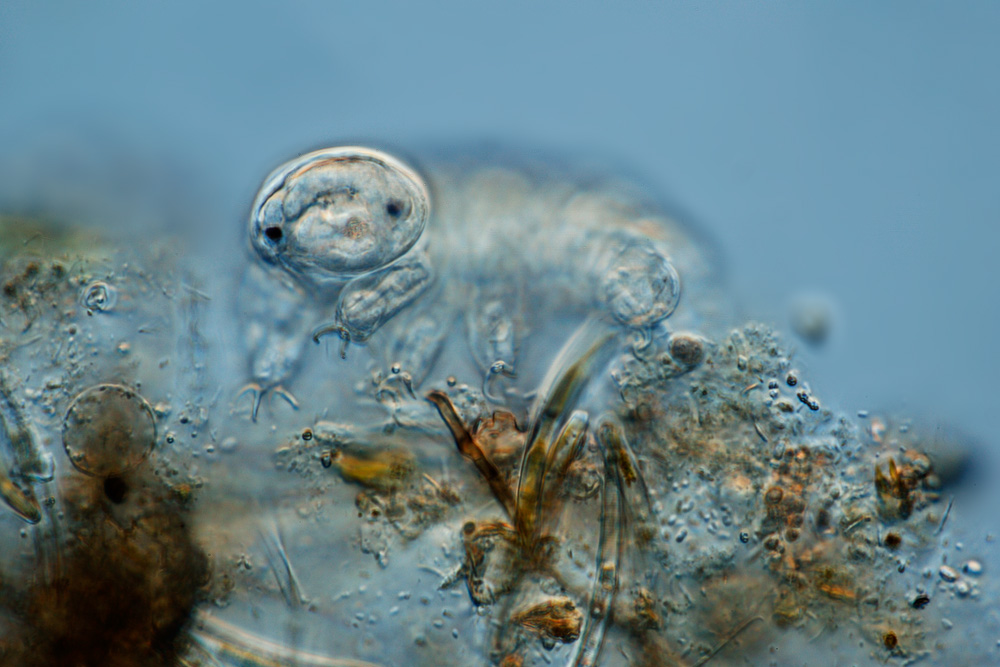
A dorsal brain sits over a ring around the pharynx; paired ventral nerve cords run the length of the animal. Many species have eyespots. The cuticle is molted; eggs are often laid inside the shed cuticle, a habit you can see in micrographs of empty “tents.”
Overview aligned with the Wikipedia tardigrade article and standard reviews; diagrams on this page are Wikimedia Commons files, not original reconstructions. See Sources.
Habitat
Anywhere a water film lasts.
Limnoterrestrial species dominate the fan imagination — moss and lichen cushions that soak and dry with the weather. Marine arthrotardigrades are just as real, and just as strange.
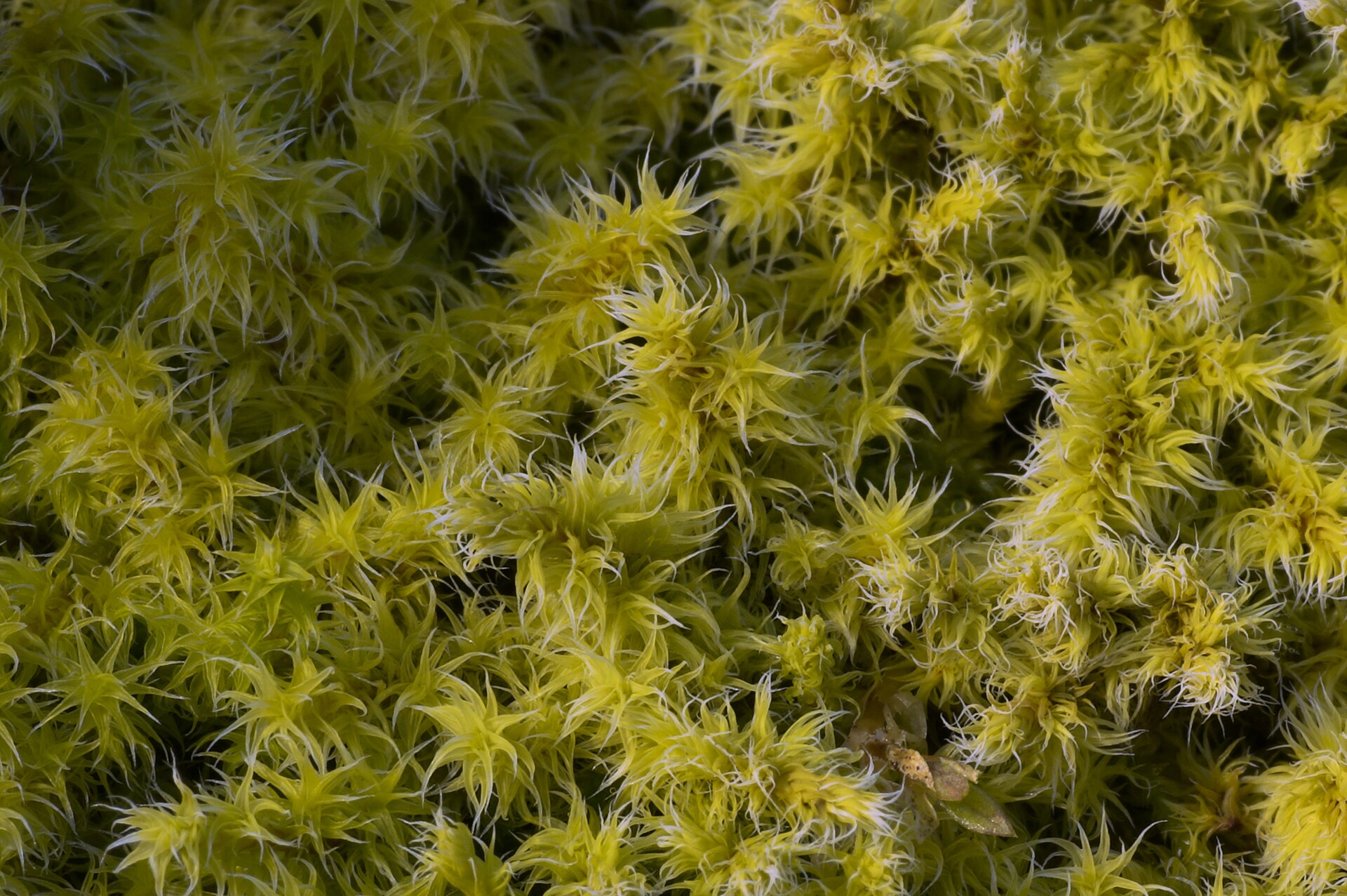
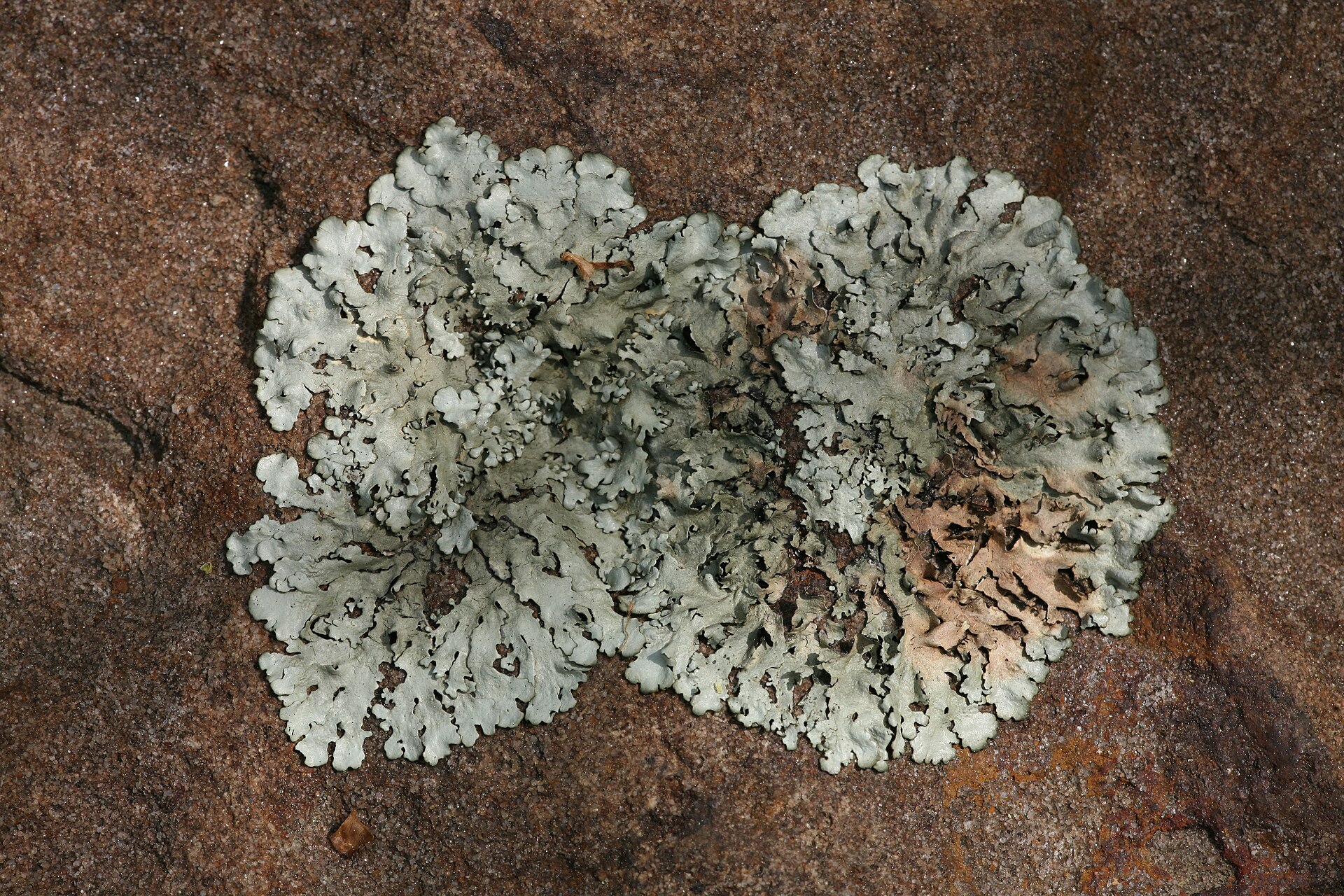
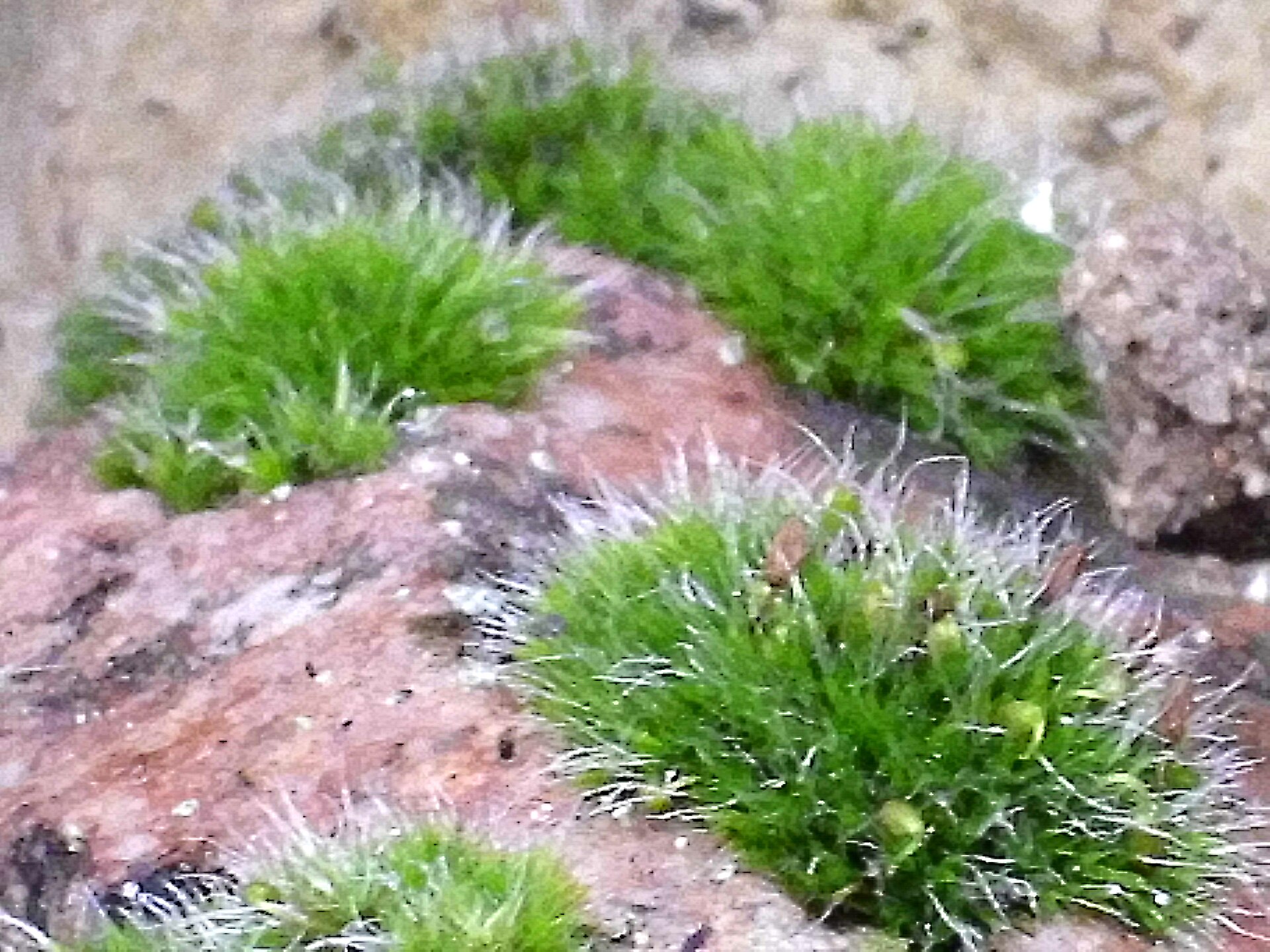
Limnoterrestrial
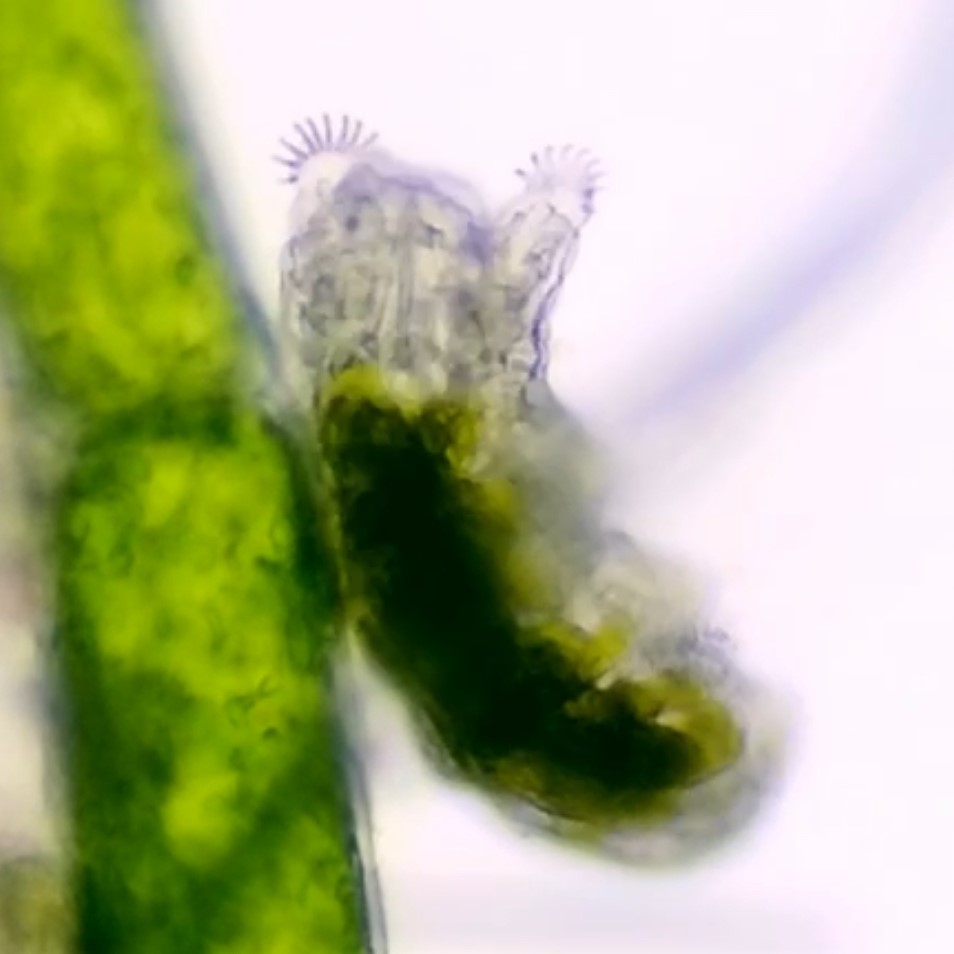
Moss, liverworts, lichen, leaf litter, soil, rooftops, gutter sediment, cryoconite holes, Antarctic fellfields. When the film evaporates, anhydrobiotic species contract into a tun. Polar species may add cryobiosis to the toolkit.
A handful of species, including the Antarctic Acutuncus antarcticus, are used as models for cold and freshwater ecology.
Marine & freshwater
Intertidal sands, deep-sea mud, and algal holdfasts host heterotardigrades with bizarre cirri and adhesive toes — Batillipes, Florarctus, Echiniscoides on barnacles. Freshwater sediments hold eutardigrades that never need a tun.
If you only ever extract moss, you are sampling one biome of a phylum.
Ecology
Micro-predators, micro-grazers, micro-neighbors.
Tardigrades sit in meiofaunal food webs with rotifers, nematodes, amoebae, and unicellular algae. Some hypsibiids pierce moss cells. Milnesium and relatives hunt. Eggs and tuns hitchhike on wind, birds, and muddy boots — a reason similar species turn up on distant mountains.
They are not ecosystem engineers on a human scale. They are indicators that a wet film, however brief, was enough. Collectors extract them by soaking moss in a dish and waiting for slow walkers under a stereomicroscope. iNaturalist observations are often photographs of the moss, not the animal; the animal still requires a scope.
Want to look? Start with mywaterbears.org and the extraction notes on Sources. Do not strip rare mosses; a pinch from a rooftop or a fallen branch is plenty.
A very short classification
| Rank | What you are looking at |
|---|---|
| Phylum | Tardigrada (also called Tardigradota in some treatments) |
| Eutardigrada | Smooth cuticle, malpighian-like organs. Includes Hypsibiidae, Milnesiidae, Macrobiotidae. |
| Heterotardigrada | Armored or marine, with cirri. Echiniscoidea (moss plates) and Arthrotardigrada (mostly marine). |
| Mesotardigrada | Historically Thermozodium esakii from a Japanese hot spring; type material lost. Treat as unresolved. |
Fossils exist: Cambrian-ish lobopodians are debated cousins; amber holds Cenozoic tardigrades, including a Dominican amber specimen on Commons. The phylum is old. The viral memes are new.