Starter article

The tun, and the kinds of almost-death.

Cryptobiosis is not a marketing term. David Keilin used it in 1959 for hidden life: metabolism so low it is practically unmeasurable, with a return ticket. Anhydrobiosis — life without water — is the tardigrade trick that made them famous. This page is the v1 starter, not a review article.

Richtersius coronifer active versus tun

Look

Active animal, then a barrel.

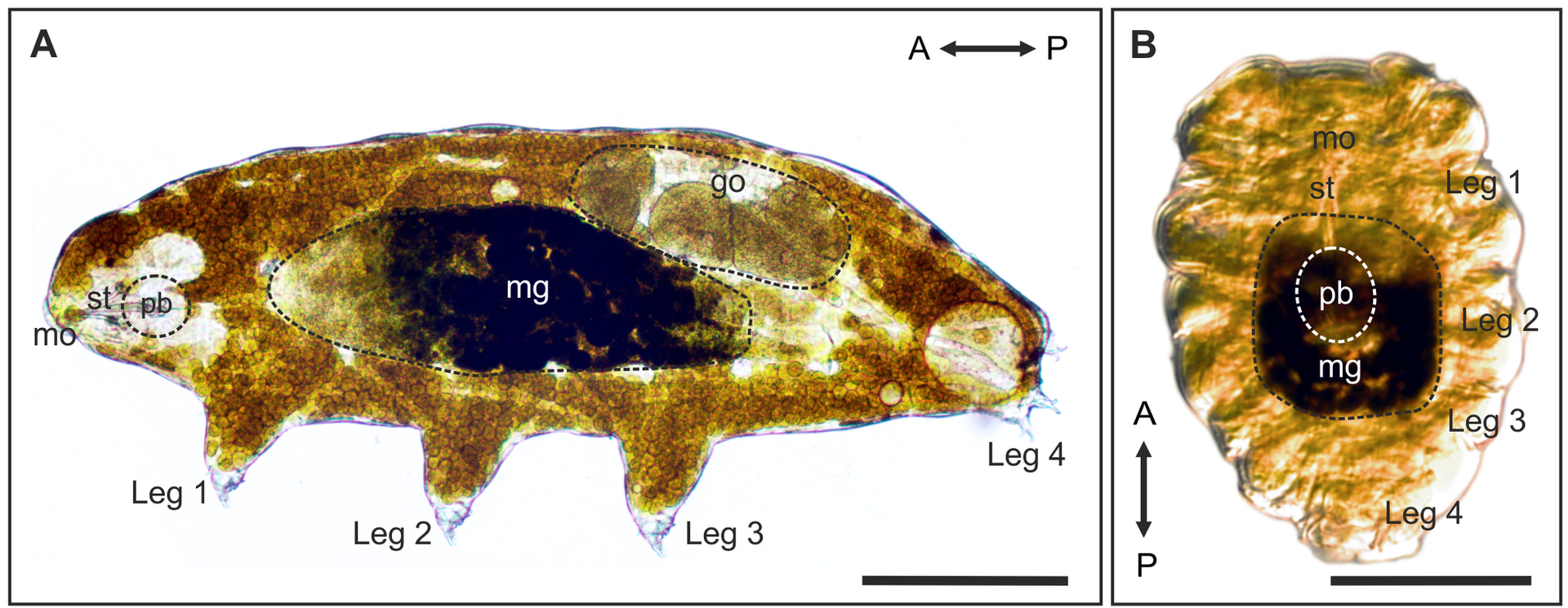
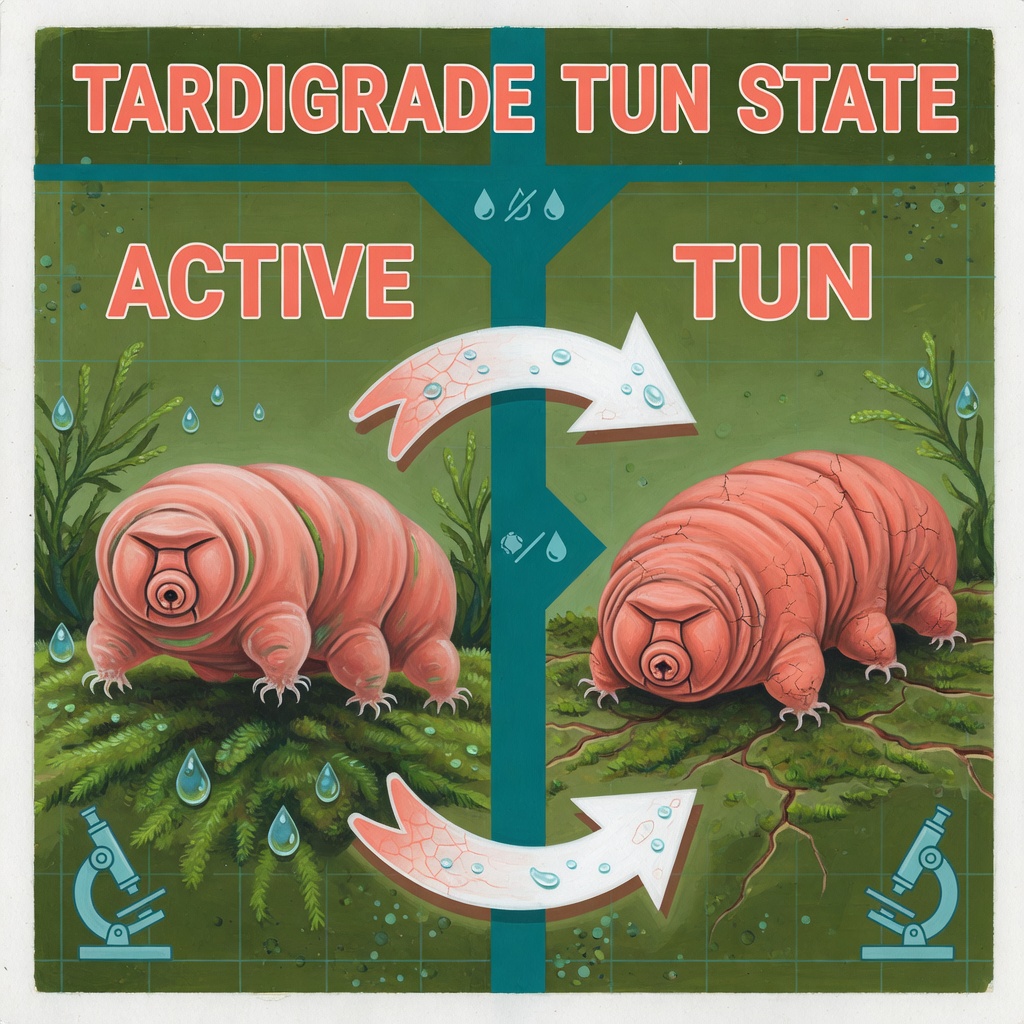
Richtersius coronifer in water, and as a tun. Legs retract, body shortens, surface area drops, and the animal waits. Same individual body plan, two physiological worlds.

Four classical flavors

Textbooks split cryptobiosis by the insult:

  • Anhydrobiosis — desiccation. The headline act. Tun formation. The state flown on FOTON-M3.
  • Cryobiosis — freezing. Ice is a different problem than dryness; some species handle both.
  • Osmobiosis — extreme salinity / osmotic shock.
  • Anoxybiosis — lack of oxygen. Often a limp, asphyxiated pose rather than a neat tun; revival is less cinematic.

These can overlap. A moss cushion on a roof in February is dry, cold, and poorly aerated depending on the hour. The animal does not fill out a form.

What a tun is

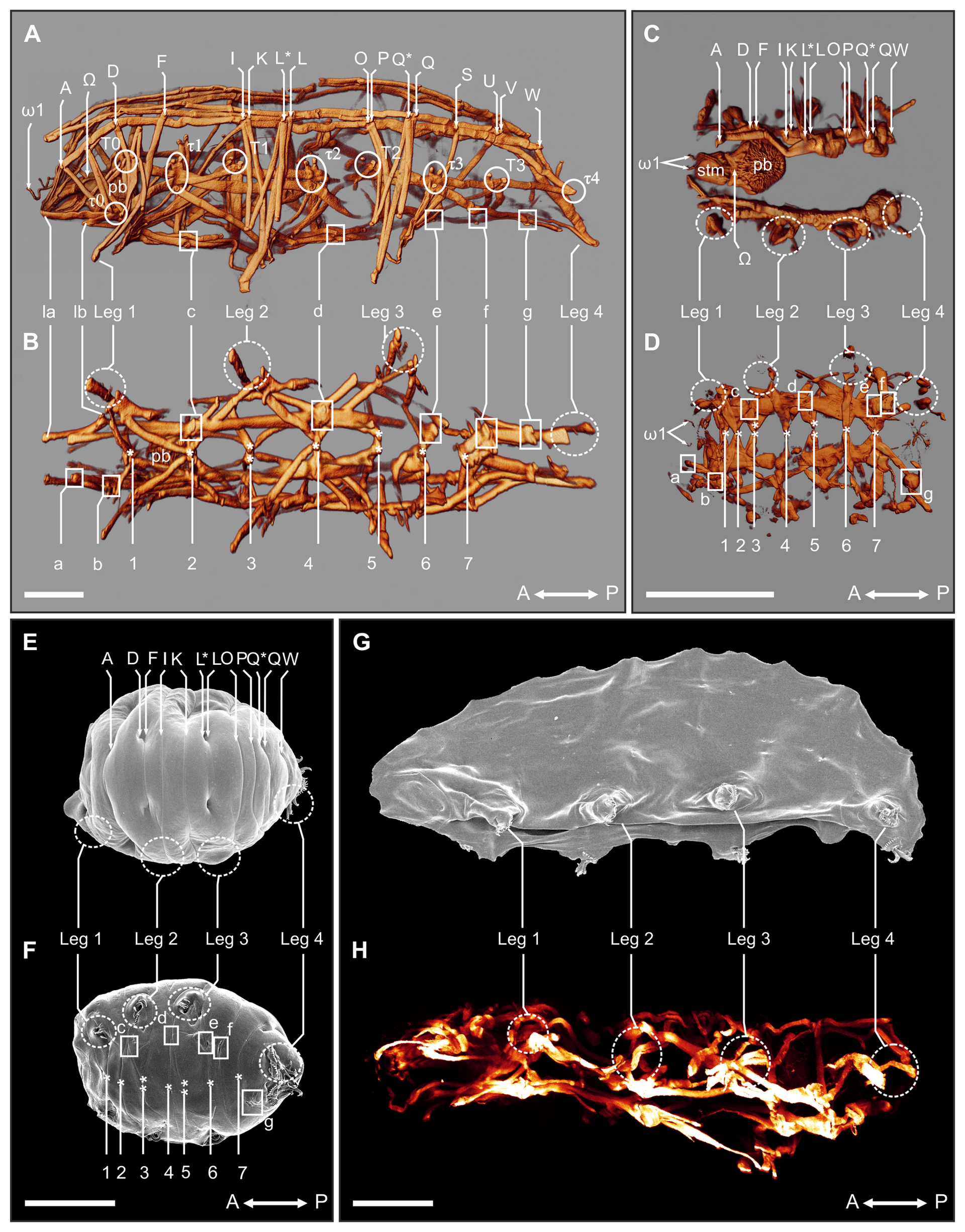
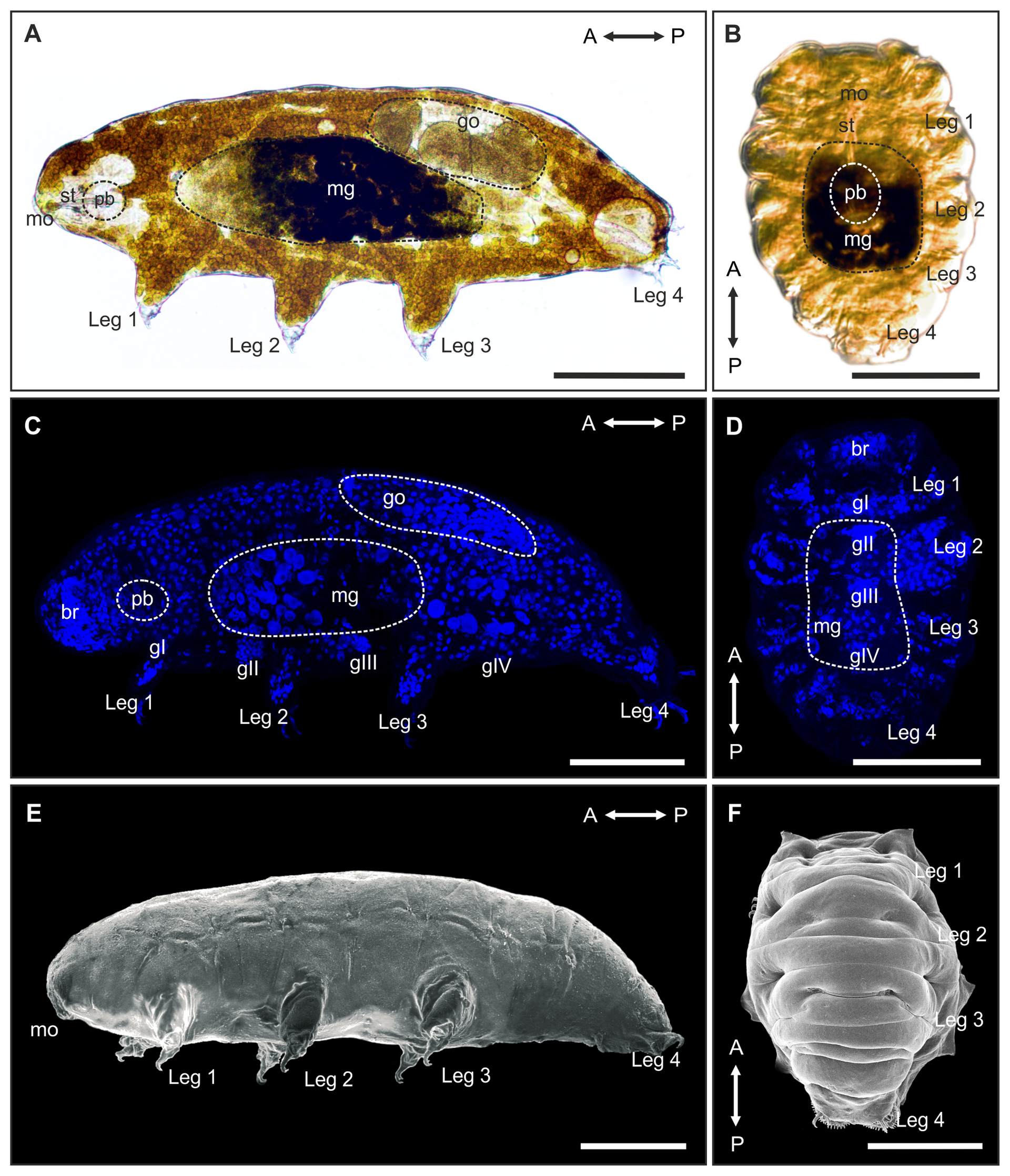
In anhydrobiosis the eutardigrade pulls in its legs, contracts along the long axis, and rearranges organs and muscles. Papers on Richtersius coronifer (Halberg, Jørgensen, Møbjerg and colleagues) document myoanatomy and organ packing during tun formation — the Commons figures on this page come from that open literature. Metabolism falls toward undetectable. Rehydration can restart walking in minutes, or fail after a delay, depending on damage and species.

Muscle changes during tun formation
Myoanatomy during tun formation in R. coronifer.
Organ rearrangement in the tun
Organs and cells packed for dryness.

Mechanisms, without fan fiction

Not just sugar. Not invincible.

Artemia cysts famously bank on trehalose. Many tardigrades do not. That surprise is now a standard talking point in the field.

CAHS and friends

Cytosolic abundant heat-soluble proteins (CAHS), plus SAHS and MAHS families, are tardigrade-specific. Boothby et al. 2017, Molecular Cell, showed intrinsically disordered CAHS proteins that can form gels and are sufficient to improve desiccation tolerance in heterologous systems. They are part of a vitrification / stabilization story, not a magic shield.
Dsup

Damage suppressor, from Ramazzottius varieornatus (Hashimoto et al. 2016, Nature Communications), binds chromatin and reduces some DNA damage in cell assays. It is not why tuns survive vacuum. It is one protein from one genome paper that the internet turned into a brand.

Limits

Hydrated animals die of ordinary heat, UV, and time. Neves et al. 2020 found active R. varieornatus failing near ~37 °C, while dry animals lasted much hotter — for a while. Space UV on FOTON-M3 still killed most specimens. Cryptobiosis is a strategy, not a license.

Illustrated active versus tun tardigrade
Hub illustration of the active ↔ tun loop (original waterbears.info art). Compare with the SEM tun of Milnesium on the species page.

Keilin D. 1959. The problem of anabiosis or latent life: history and current concept. Proc. R. Soc. B. Crowe’s anhydrobiosis reviews. Boothby TC et al. 2017 Mol Cell. Hashimoto et al. 2016 Nat Commun. Halberg / Møbjerg tun-anatomy papers. Wikipedia “Tardigrade” and “Cryptobiosis” as maps, not as gospel.